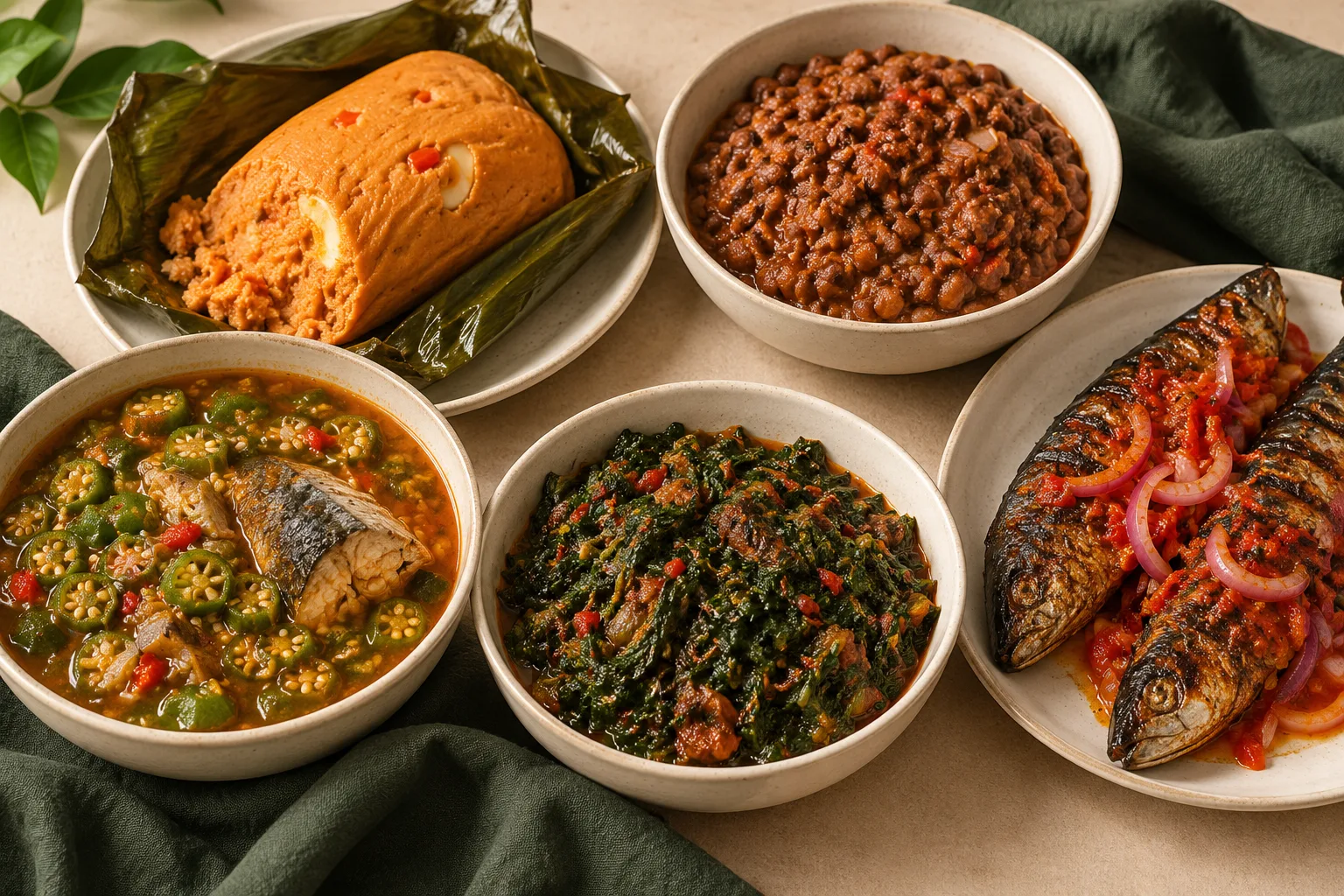
Managing high blood pressure does not have to mean giving up Nigerian food. How you season, prepare, and serve a dish can make a meaningful difference.
The DASH eating pattern emphasizes vegetables, beans, whole grains, fruit, and fish while limiting sodium and saturated fat. The five ideas below apply those principles to familiar Nigerian meals. They are preparation suggestions, not a ranking of foods proven to lower blood pressure on their own.
1. Moi moi
This steamed bean pudding is a familiar way to put beans on the menu. Beans provide fiber and plant protein, and steaming gives you a cooking option that does not require deep-frying.
Try this: build the flavor with blended peppers and onion. Measure the salt and seasoning cubes rather than adding them repeatedly, and check the sodium in any canned fish or stock you include. Serve with vegetables as part of your meal.
2. Ewa riro (bean porridge)
A pot of beans can be the foundation of a satisfying meal. The final dish depends on what goes into the pot, including the oil, stock, salt, and any meat or fish.
Try this: let tomatoes, onions, and peppers do more of the flavor work. Use a measured amount of oil and choose a lower-sodium stock. If using canned beans, choose no-salt-added versions or drain and rinse them. Add a vegetable side.
3. Okra soup
Okra soup offers a familiar way to include vegetables. Fresh fish can accompany it, and your usual swallow can still be discussed as part of an individualized meal plan.
Try this: use fresh fish instead of heavily salted fish, and check how much sodium your seasoning mix contributes. Avoid stacking several salty ingredients in the same pot. Choose the portion of soup and swallow with your overall meal in mind.
4. Efo riro
This leafy vegetable stew keeps greens at the center of the meal. Its salt and fat content vary with the recipe, so the name of the dish alone does not tell you how it fits your needs.
Try this: make the greens generous, measure the palm oil, and use less salty stock, smoked meat, or seasoning cubes. Palm oil is high in saturated fat; keeping the amount modest is one way to adapt the recipe while retaining its familiar character.
5. Grilled fresh fish
Fresh grilled fish, such as mackerel, can be served with vegetables and a portion of a familiar starch. Grilling does not automatically make a dish low in sodium: the marinade and sauces matter too.
Try this: season with ginger, garlic, pepper, onion, and lemon. Check packaged spice blends for salt and offer sauces separately so you can control how much you use.
Think about the whole pot—and the whole week
Start with one favorite recipe. Check the labels on stock and seasoning, measure what you add, and taste as you go. A lower-sodium eating pattern can support blood pressure management, but no single dish replaces prescribed medicine or follow-up care.
You can bring your recipes to nutrition counseling. Together, we can explore practical changes that fit your health needs without losing the foods that feel like home.
Care that fits your life
Learn how Good Health can support your next step.
Explore nutrition counselingSources and further reading
General education, not a personal treatment plan. Discuss changes with your healthcare team. Images are illustrative.
Back to the journal