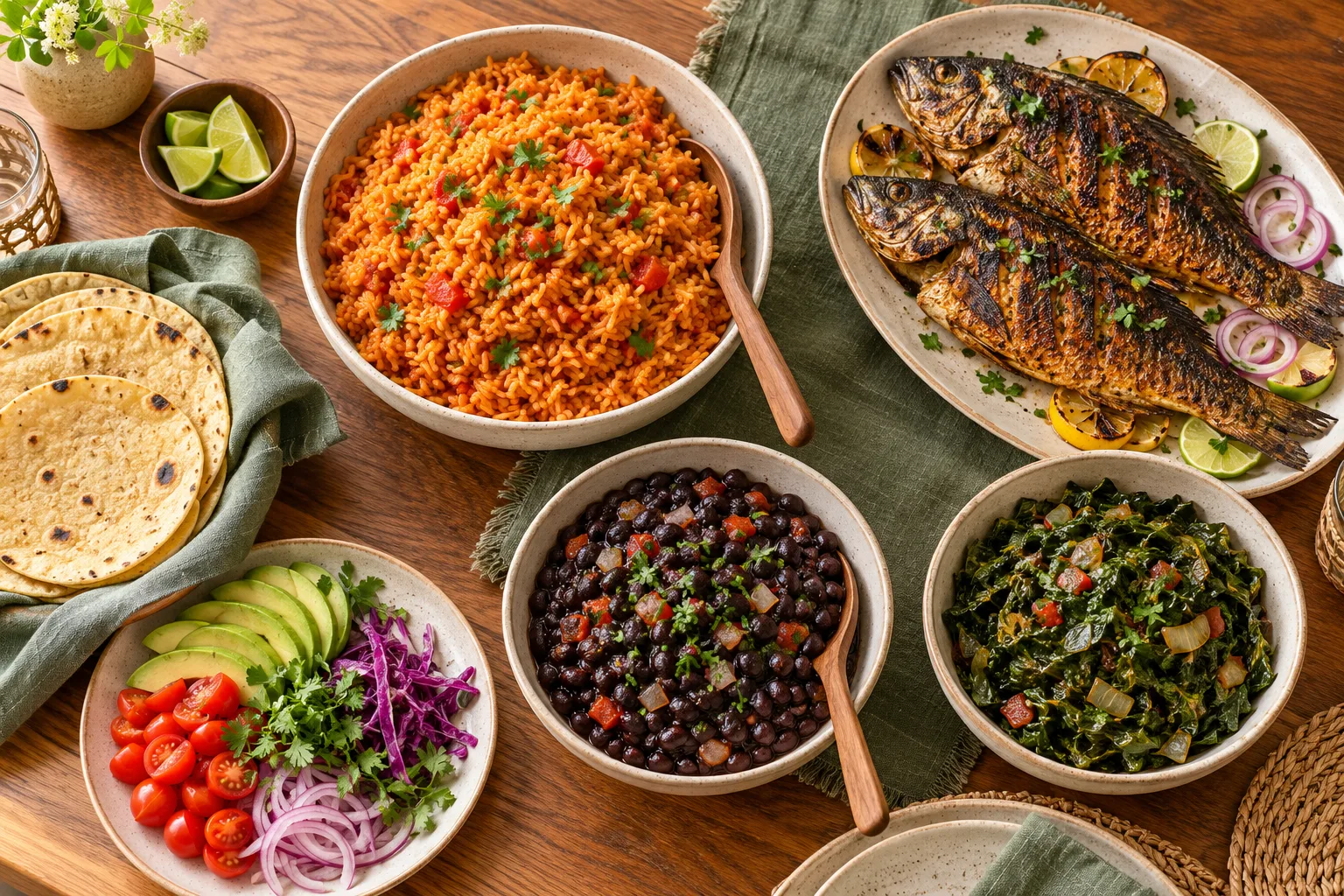
Food is more than a list of nutrients. It can be the pot your family gathers around, a recipe passed down through generations, or the meal that makes a new place feel like home. A useful nutrition plan makes room for those connections.
You do not need to replace every familiar dish to start eating differently. Begin with the meals you already cook, then look for small changes you can repeat.
Start with what you want to keep
Write down three meals you enjoy most. Be specific: the rice, stew, vegetables, sides, drinks, and seasonings all help tell the story. Also note who cooks, what groceries cost, and how much time you have on a workday.
Bring that list to your dietitian. “I want to keep our Sunday meal” is a useful starting point. So is “I need a lunch I can pack in ten minutes.”
Build on a familiar plate
Instead of asking whether a whole cuisine is healthy, look at the ingredients and balance of a particular meal. Vegetables, beans, whole grains, and fish can all be part of a heart-supportive eating pattern. Here are a few starting ideas to adapt to your preferences:
- Jollof rice: serve it alongside grilled fish and a generous helping of vegetables.
- Rice and beans: add cabbage, peppers, or a salad for more variety.
- Tacos: try beans or fish with cabbage, tomatoes, and a salsa you enjoy.
- Collard greens: experiment with onion, garlic, and vinegar while using less salty meat or seasoning.
These are meal ideas, not fixed portion prescriptions. Your needs depend on your health, appetite, activity, and any treatment plan.
Keep the flavor; rethink the extras
Salt can come from several places in one recipe: stock, seasoning blends, sauces, and cured meats. Compare labels and taste before adding more. Onion, ginger, garlic, pepper, citrus, and herbs offer other ways to build flavor. Try one adjustment at a time so the dish still feels like yours.
Choose one change for this week
Pick a change small enough to fit a busy day: keep frozen vegetables ready for dinner, add beans to a meal, or test a lower-sodium stock in a favorite stew. Notice what tastes good and what your household will actually use.
Nutrition counseling can help turn those experiments into a plan that respects your traditions, schedule, and health goals. Bring your recipes and your questions. Your culture belongs in the conversation.
Care that fits your life
Learn how Good Health can support your next step.
Explore nutrition counselingSources and further reading
General education, not a personal treatment plan. Discuss changes with your healthcare team. Images are illustrative.
Back to the journal